Training to Failure for Muscle Growth: When to Push Hard and When to Stop Short

Direct answer: training to failure can build muscle, but most lifters do not need every set to reach failure. For muscle growth, the sweet spot is usually hard sets that finish with 0-3 reps in reserve. Push safer isolation and machine exercises closer to failure. Stop heavy compound lifts earlier, especially squats, deadlifts, bench presses, and overhead presses where form breakdown is expensive.
Failure training is popular because it feels honest. You either got the rep or you did not. But the goal is not to prove toughness on every set. The goal is to create enough stimulus to grow, recover from it, and repeat that process for months. A set that ends one clean rep short of failure can be just as productive as a true failure set if it lets you train with better volume, better technique, and less joint stress.
What Training to Failure Actually Means
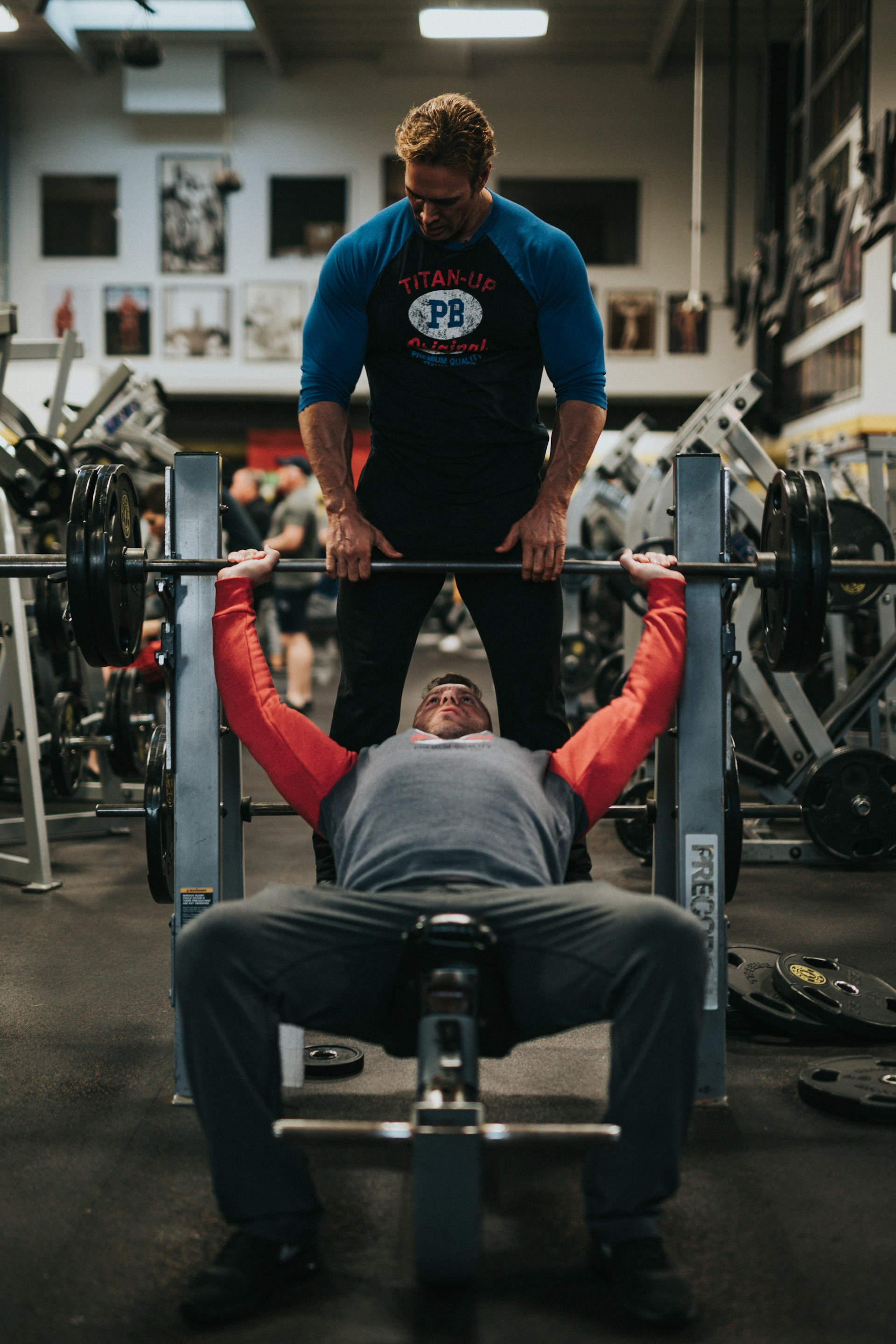
Training to failure means continuing a set until you cannot complete another rep with acceptable technique. That last phrase matters. A deadlift rep that turns into a rounded-back hitch is not productive failure. A bench press rep that needs a spotter to upright-row the bar off your chest is not a clean training signal. It is a missed lift.
There are three useful levels: technical failure, muscular failure, and volitional failure. Technical failure means your form breaks down before the target muscle is fully exhausted. Muscular failure means the target muscle cannot complete another clean rep. Volitional failure means you stop because effort, discomfort, or breathing becomes too high.
Most gym sets stop at volitional failure, not true muscular failure. That is normal. High-rep split squats, rows, and leg presses can feel impossible before the muscle is truly done. That is why reps in reserve is more useful than asking whether you “went hard.” Reps in reserve, or RIR, means how many clean reps you likely had left when the set ended.
What the Research Says
The current evidence is practical: failure is a tool, not a requirement. A systematic review and meta-analysis on training to repetition failure found that failure and non-failure training can produce similar strength and hypertrophy outcomes when total training volume is considered (PubMed).
Another meta-analysis comparing failure and non-failure training reached a similar conclusion: training to failure is not automatically superior for strength, hypertrophy, or power output (PubMed).
The nuance is proximity. A review on proximity-to-failure and hypertrophy suggests that being reasonably close to failure matters, especially with lighter loads, but the exact benefit of hitting true failure depends on the exercise, training status, and how fatigue is managed (PubMed). ACSM’s resistance training progression model also frames progress through several variables: load, volume, rest, frequency, and exercise selection, not constant all-out sets (ACSM position stand).
When Failure Helps Muscle Growth
Failure can be useful when the exercise is stable, low-risk, and easy to recover from. It also helps lifters learn what a truly hard set feels like. Many beginners and intermediates stop sets too early because burning, breathing, or discomfort feels like the limit before the muscle is actually close to done.
Good failure candidates include leg extensions, hamstring curls, cable curls, triceps pressdowns, lateral raises, rear delt flyes, machine chest presses, chest-supported rows, calf raises, band pull-aparts, and banded glute work. On these exercises, failure usually means the target muscle can no longer move the load through a controlled range. The consequence is low. You stop, rack the weight, and recover.
Resistance bands also fit here because they are easy to bail out of and create rising tension through the rep. For home accessories, the Tribe Lifting resistance bands set works well for high-rep rows, presses, curls, triceps extensions, and warm-up work. For glute-focused finishers, the Tribe Lifting fabric bands are useful for lateral walks, glute bridges, and abduction work. Use them for controlled hard sets, not sloppy burnout contests.
When You Should Stop Short
Failure becomes more expensive when the lift is heavy, technical, axial-loaded, or hard to recover from. Heavy squats, deadlifts, good mornings, barbell rows, bench presses, and overhead presses demand bracing and position. When those break down, the set changes from muscle-building work to compensation.
For most compound lifts, stop with 1-3 reps in reserve. Beginners can stay at 2-4 reps in reserve while technique develops. Advanced lifters can occasionally push closer, but they should know why they are doing it and where it fits in the week.
- Heavy barbell compounds: 1-3 RIR most of the time.
- Dumbbell compounds: 1-2 RIR.
- Machines: 0-2 RIR.
- Isolation exercises: 0-1 RIR on selected sets.
- Bands and bodyweight accessories: 0-2 RIR if technique stays clean.
If one failure set ruins the next two exercises, it was not a good trade. The best training set is not the hardest possible set. It is the set that creates the most useful stimulus for the fatigue it costs.
The Junk Volume Problem
Failure training can quietly turn into junk volume. The first hard set may be productive. The second may still be useful. By the fourth all-out set, load has dropped, reps are ugly, rest periods are longer, and the target muscle may no longer be the limiter.
Signs failure is becoming junk volume include performance dropping more than 20% across sets, joint pain rising during the workout, the target muscle no longer failing first, soreness lasting longer than 72 hours, and the next workout for the same muscle getting worse. If that is happening, do not add more intensity techniques. Pull back. Keep most sets at RIR 1-3 and reserve true failure for the final set of safer accessories.
For a broader view of volume management, read how to track training volume.
A Practical Failure Training Template
Here is a simple upper-body hypertrophy session that uses failure without letting it dominate the workout.
- Incline dumbbell press: 3 sets of 8-12 at RIR 1-2
- Chest-supported row: 3 sets of 8-12 at RIR 1-2
- Machine chest press: 2 sets of 10-15 at RIR 1, final set RIR 0
- Lat pulldown: 3 sets of 10-12 at RIR 1-2
- Lateral raise: 3 sets of 12-20, final set RIR 0-1
- Cable curl: 2 sets of 10-15, final set RIR 0-1
- Triceps pressdown: 2 sets of 10-15, final set RIR 0-1
Notice what is missing: forced reps on every exercise. The main compounds are hard but controlled. Failure shows up near the end, on exercises with lower injury cost. That is the pattern most lifters can repeat. For lower body, use the same idea. Squats and Romanian deadlifts stay short of failure. Leg extensions, hamstring curls, calf raises, and banded glute work can move closer to failure.
Beginners Should Calibrate, Not Max Out
Beginners usually have two problems at once: they underestimate what hard training feels like, and they lose technique quickly when fatigue climbs. That is why the answer is not “never train to failure” or “go to failure every set.” It is calibration.
Once per week, pick one safe exercise and take the last set to true technical failure. Good choices are machine rows, leg extensions, curls, lateral raises, or band exercises. Before the set ends, guess your RIR. Then continue until no clean rep remains. Compare your guess to reality.
If you thought you had one rep left and completed five more, you are training too easy. If you thought you had three left and failed on the next rep, you are closer than you think. After a few weeks, your effort gauge improves. For a structured beginner plan, use the complete beginner strength training program.
How to Progress Without Chasing Failure
Progressive overload still matters. Failure is not a progression plan by itself. If every week is just “go as hard as possible,” you have no clean way to know whether the program is working.
Use double progression. Choose a rep range, such as 8-12. Keep the same weight until all sets reach the top of the range. Add load next time, return to the lower end of the range, and keep effort mostly at RIR 1-3.
Example: 70 pounds for 10, 9, 8 in week one; 70 for 11, 10, 9 in week two; 70 for 12, 11, 10 in week three; 70 for 12, 12, 12 in week four; then 75 for 9, 8, 8 in week five.
That is better than failing at 70 pounds every week with no performance trend. For more progression options, see progressive overload methods without burning out.
Get Stronger Every Week
Join 50,000+ lifters getting evidence-based training advice in their inbox.
Frequently Asked Questions
Do you need to train to failure to build muscle?
No. You need to train close enough to failure to create a strong stimulus. Most hypertrophy sets should finish around 0-3 reps in reserve, but true failure is optional and should be used selectively.
How many sets should go to failure?
For most lifters, 0-3 failure sets per workout is enough. Put them on safer exercises near the end of the session, not on every heavy compound lift.
Is training to failure bad for strength?
Not always, but frequent failure can interfere with strength progress by increasing fatigue and reducing high-quality practice. Strength-focused work usually does better with hard sets that stop 1-3 reps short.
Which exercises are safest to train to failure?
Machines, cables, isolation lifts, and resistance band accessories are safest. Heavy squats, deadlifts, good mornings, and free-weight presses should usually stop short.
Should beginners train to failure?
Beginners should mostly stop with 2-4 reps in reserve while learning technique. One safe calibration set per week can help them learn what real effort feels like without turning the whole program into a grind.


