Why Heavier Weights Are Not Always Better for Strength Progress

Direct answer: heavier weights are not always better for strength progress because load is only one training variable. Add weight when the current work is complete, repeatable, technically sound, and recoverable. Do not add weight when range of motion shrinks, reps turn into grinders, joints change the movement, or fatigue makes the next sessions worse. Long-term strength comes from productive stress, not from forcing the heaviest possible number onto every set.
This is where a lot of lifters get stuck. The logbook says progress should be simple: add five pounds and come back next week. That works beautifully in the early beginner phase because technique, coordination, confidence, and muscle recruitment improve fast. Later, the same rule can turn good training into a slow leak. The bar gets heavier, but the stimulus gets worse. Squats lose depth. Bench presses bounce. Rows become hip heaves. The lifter technically lifted more, but trained less of the target movement.

Why Heavier Is Not Always Better
Heavier weights help when they increase the useful challenge on the muscles and skill you are trying to train. They hurt progress when they change the exercise so much that you are no longer training the same thing. A deadlift that turns into a rounded-back hitch, a squat that loses three inches of depth, or a curl that becomes a full-body swing is not a better version of last week. It is a different rep with a bigger number attached.
The American College of Sports Medicine describes resistance training progression through changes in load, volume, frequency, rest, exercise choice, and exercise order (ACSM position stand). That matters because a program has more than one lever. Load is important, but it is not the only way to create adaptation.
Strength is also specific. You get better at producing force in the positions you practice. If you add load and lose position, you may be practicing a weaker pattern. Over months, that shows up as plateaus, soreness in the wrong places, and confidence that disappears when weights get heavy.
For the bigger framework, read our guide to smarter progressive overload. The short version is simple: make training harder only when the quality of the work stays high enough to be worth repeating.
When Should You Add Weight?
Add weight when the current load is no longer creating enough challenge for the goal. That usually means you can complete all prescribed sets and reps with stable technique, full intended range of motion, predictable bar speed, and one to three reps in reserve. If the workout still looks clean when you are tired, the next small load jump is probably earned.
A practical checklist:
- Rep target complete: every set reaches the planned rep range.
- Technique stable: depth, bracing, grip, tempo, and setup match previous weeks.
- Effort controlled: sets feel hard but not like max attempts.
- Recovery normal: soreness, sleep, appetite, and motivation are not trending down.
- Next jump is reasonable: the increase is small enough for the lift.
Use smaller jumps on upper-body lifts. Five pounds can be a modest squat jump and a huge overhead press jump. Dumbbell exercises are even trickier because the next pair may represent a 10-20% increase. If the jump is too big, build reps first or use microloading. Our microloading guide explains why fractional increases can keep progress moving when normal plate jumps are too aggressive.
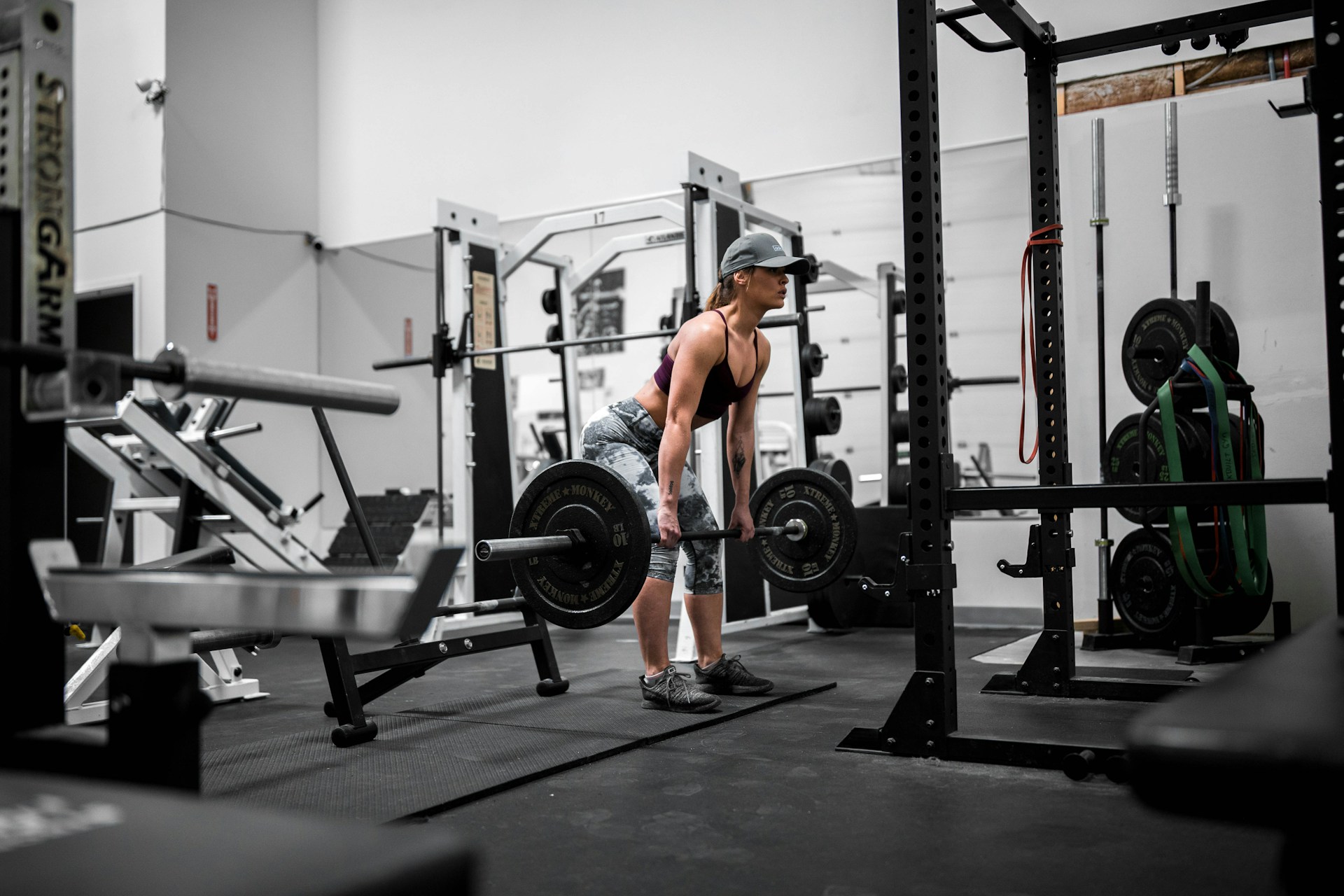
How Can Lifters Progress Without Heavier Weights?
Lifters can progress without heavier weights by adding clean reps, improving range of motion, controlling tempo, adding a recoverable set, shortening rest on accessories, using a harder variation, or making the same work feel easier. These are not backup plans. They are normal parts of serious training once beginner gains slow down.
The most reliable method is double progression. Pick a rep range and stay with the same load until every set reaches the top of that range. If dumbbell bench press is programmed for 3 sets of 8-12 and you hit 10, 9, and 8, keep the same dumbbells. Build to 12, 12, and 12 before increasing load. That is measurable progress without rushing the jump.
Tempo and range of motion work when they are honest. A paused squat can build control in the bottom. A slower eccentric on a Romanian deadlift can make the hamstrings do more work. A full-stretch row can be more productive than a heavier half-rep. The rule is that the change must be tracked. Do not compare paused reps to normal reps as if they are identical.
Volume can also help, especially for muscle growth. A meta-analysis in Sports Medicine found a dose-response relationship between weekly resistance training volume and hypertrophy when the added work is recoverable (Schoenfeld et al.). The useful takeaway is not "do endless sets." It is "add enough quality work to move the lift, then stop before fatigue outruns adaptation."
For a deeper progression model, use our double progression method. It works especially well for dumbbells, machines, bands, and accessory lifts where load jumps are often too large.
What Signs Show You Should Lower the Load?
Lower the load when the weight is changing the lift more than it is challenging the lift. Most lifters know when this is happening, but pride makes them explain it away. The set becomes louder, shorter, slower, and less repeatable. Warm-ups feel strange. The same joints complain every session. The target muscle is no longer the thing that fails first.
Use these signs as a stoplight:
- Range of motion shrinks to finish the set.
- Bar speed drops hard before the last rep.
- Technique changes under loads that should be routine.
- Pain changes your setup, grip, stance, or path.
- You miss the same weight for two or three exposures.
- Several unrelated lifts regress in the same week.
- Warm-up weights feel unusually heavy for more than one session.
One bad day is not a crisis. Repeated pattern changes are data. Research on reps in reserve and perceived exertion supports using effort ratings to adjust training when readiness changes (Helms et al.). In plain terms, if the planned weight is there but your body is not, adjust before one bad session becomes a bad block.

A Simple Four-Week Plan for Smarter Loading
If you keep forcing load and stalling, run this four-week reset. Keep your main exercises the same so you can compare performance honestly.
Week 1: Clean Baseline
Reduce working loads by 5-10% and perform every set with strict range of motion. Stop with two or three reps in reserve. Your goal is to find the heaviest weight you can repeat without technical bargaining.
Week 2: Add Reps
Keep load the same and add one clean rep to one or more sets. If your prescription is 3 sets of 6-10, do not add weight until all sets are close to the top of the range.
Week 3: Add One Small Stress
Add one set to the stalled lift or add a pause on the hardest position. Do not add both. The goal is to create a clearer signal, not to throw every progression tool at the lift.
Week 4: Earn the Load Jump
If reps, technique, and recovery are stable, add the smallest practical amount of weight. If quality falls apart, keep the load and improve the rep target again. This is not conservative forever. It is aggressive patience: enough restraint to keep training productive long enough for bigger numbers to arrive.
Equipment and Recovery That Make Load Jumps Safer
Equipment should make good training easier, not excuse bad loading. A belt can help bracing on heavy squats and deadlifts once you already know how to brace. Wrist wraps can keep pressing positions more consistent. Lifting straps can let rows and Romanian deadlifts train the back and hamstrings when grip is not the target.
For heavier barbell sessions, the Tribe Lifting weight lifting belt can support squat and deadlift work, while Tribe Lifting wrist wraps are useful for bench and overhead press days. For joint-friendly accessories and warm-ups, the Tribe Lifting resistance bands set works well for rows, face pulls, pulldowns, pressdowns, curls, and banded good mornings.
Recovery decides whether load becomes adaptation or just stress. If sleep is poor, calories are low, or life stress is high, the same weight costs more. That does not mean you are weak. It means the program has to respond to the body in front of you. Strength improves fastest when hard training is paired with enough recovery to express it again.
Bottom Line
Heavier weights are useful when they create a better strength stimulus. They are not useful when they shorten reps, break technique, irritate joints, or bury recovery. The best lifters do not avoid heavy training. They earn it.
Add load when the work is complete and repeatable. Add reps, tempo, range of motion, or recoverable volume when the next weight jump would make training worse. Lower the load when quality tells you the number has gotten ahead of the lift. That is how strength keeps moving after beginner gains end.
Get Stronger Every Week
Join 50,000+ lifters getting evidence-based training advice in their inbox.
Frequently Asked Questions
Are heavier weights always better for strength?
No. Heavier weights help when technique, range of motion, and recovery stay strong. They become counterproductive when the added load changes the lift, causes pain, or turns every set into a max-effort grind.
When should I add weight to an exercise?
Add weight when you complete the target sets and reps with stable technique, full intended range of motion, controlled effort, and normal recovery. Use the smallest practical jump, especially on upper-body lifts.
How can I progress without adding load?
Add clean reps, improve range of motion, slow tempo, add one recoverable set, use a harder variation, or make the same work feel easier at the same load. These all count when they create useful, measurable progress.
What signs mean I should lower the weight?
Lower the weight if reps get shorter, technique changes, pain alters your setup, warm-ups feel unusually heavy for multiple sessions, or several unrelated lifts regress in the same week.
Is it bad to lift heavy?
No. Heavy lifting is valuable when it is earned and controlled. The problem is not heavy training; the problem is forcing heavier loads before the current work is technically solid and recoverable.


