Progressive Overload Training: What Actually Counts as Progress?

Direct answer: progressive overload training means the target muscles and movement patterns face a gradually higher demand over time. Adding weight is the clearest example, but it is not the only valid form of progress. More clean reps, more useful sets, better range of motion, stricter tempo, improved technique, shorter rest on accessories, harder exercise variations, and better recovery can all count when they make training more productive and repeatable.
The important phrase is productive and repeatable. A set is not automatically better because it is harder. A workout is not automatically better because it leaves you destroyed. Progressive overload should make the next block of training possible, not just make today look impressive in the logbook.

What Progressive Overload Training Really Means
Progressive overload training is the planned increase of training stress so the body has a reason to adapt. The American College of Sports Medicine describes resistance training progression through load, volume, frequency, rest periods, exercise selection, and exercise order (ACSM position stand). That is a better definition than "add five pounds every Monday."
Load matters because it is measurable. If your squat moves from 225 for 5 clean reps to 245 for 5 clean reps, you are stronger. But lifters stall when they treat the bar weight as the only signal. If the weight rises while depth gets higher, tempo gets loose, pain increases, and the next session gets worse, the number went up but the training quality went down.
A useful overload signal has three traits. It is measurable, it keeps the target movement honest, and it can be repeated often enough to build momentum. That is why better form can count, why an extra rep can count, and why a deload can sometimes be the right next step.
If you want the variable-by-variable version, read our guide to progressive overload with load, reps, sets, tempo, and rest. This article focuses on judging whether a change actually counts as progress.
Better Form Counts When It Changes the Stimulus
Yes, better form can count as progressive overload, but not in a vague motivational way. It counts when the same external load now creates a better training stimulus. A deeper squat with the same weight, a paused bench that stays tight, a deadlift that leaves the floor without hitching, or a row that stops using hip swing can all be progress.
Technique improvements matter most when they make the lift more consistent. If your squat depth changes every set, the logbook is hard to trust. If your bench touch point drifts every week, you cannot tell whether your chest, triceps, setup, or fatigue is the real limiter. Clean technique makes future overload measurable.
Use this rule: if better form makes the lift harder in the target muscles while reducing compensation, count it as progress. If "better form" is just a lighter workout with no plan to build back up, count it as practice, not overload. Both are useful, but they are not the same.
For newer lifters, the first month of progress often looks like cleaner reps rather than bigger weights. That is fine. The fastest way to stall later is to rush past the skill-building phase and start loading a movement pattern you cannot repeat.
Reps and Load Are the Main Scoreboard
For most lifters, reps and load should still be the main scoreboard. They are simple, honest, and easy to compare. The best default is double progression: choose a rep range, keep the load stable until all sets reach the top of the range with clean form, then add the smallest practical amount of weight.
For example, if your dumbbell bench target is 3 sets of 8-12, do not add weight after one set of 12. Add weight after all three sets are near the top of the range with the same setup, range of motion, and effort target. Then rebuild from the lower end of the range.
Use narrower ranges for strength work and wider ranges for accessories:
- Main strength lifts: 3-5, 4-6, or 5-8 reps.
- Hypertrophy compounds: 6-10 or 8-12 reps.
- Isolation lifts: 10-15, 12-20, or 15-25 reps.
- Band and pump work: 15-30 reps when joints feel good.
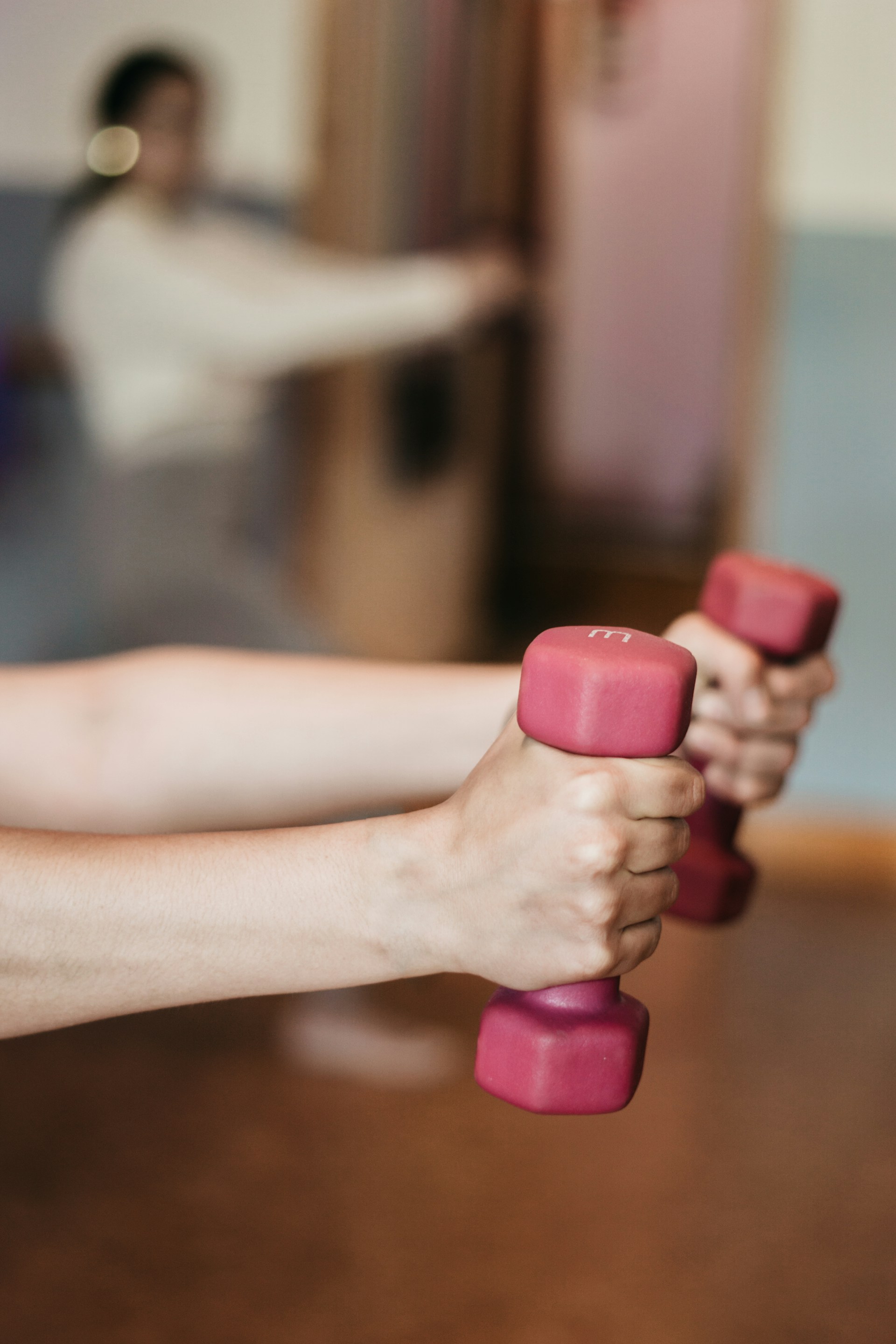
Small jumps matter. A five-pound increase on squats may be easy. A five-pound increase per hand on curls can be enormous. When load jumps are too large, use reps, pauses, slower eccentrics, or microloading. Our microloading guide covers that exact problem.
Sets, Tempo, and Range of Motion Are Secondary Levers
Sets are powerful because they raise weekly volume. They are also the easiest lever to overuse. More sets can help when the current dose is no longer enough and recovery is normal. More sets hurt when they turn productive training into soreness, joint irritation, and weaker future sessions.
A meta-analysis in Sports Medicine found a dose-response relationship between weekly resistance training volume and muscle growth when recovery is adequate (Schoenfeld et al.). The recovery condition is not a footnote. It is the limiter. Adding sets counts as progress only if performance, technique, and readiness can absorb them.
Tempo and range of motion can also count, especially when they make reps more controlled. A three-second eccentric on a lateral raise, a paused split squat, or a full-stretch cable row can create more useful tension without needing a heavier load. But tempo should be tracked. If last week was normal speed and this week was slow eccentrics, compare the two honestly instead of pretending they are identical workouts.
Resistance bands fit well here because they let you add joint-friendly accessory work without turning every session into heavy spinal loading. The Tribe Lifting resistance bands set works for rows, pulldowns, curls, triceps pressdowns, and warm-ups. The Tribe Lifting fabric bands are useful for glute bridges, lateral walks, and lower-body prep before squats or lunges.
Recovery Progress Is Still Progress
Recovery progress is real because training only works when you adapt to it. If two lifters do the same program and one sleeps better, eats enough protein, manages fatigue, and shows up ready, that lifter gets more from the same work.
Reps in reserve, or RIR, helps keep hard training repeatable. A review on RPE and resistance training supports using perceived effort to guide loading when readiness changes (Helms et al.). In practice, most compound work should live around one to three reps in reserve, while isolation work can move closer to failure when joints tolerate it.
Recovery progress can look like matching last week's lifts with lower effort, better bar speed, less soreness, cleaner warm-ups, or fewer joint complaints. Those are not excuses to avoid overload. They are signs that the current dose is becoming more manageable, which usually means you are close to earning the next increase.
Support gear belongs in the same category: useful when it helps you train the intended movement, not useful when it hides bad programming. A belt can help heavy squats and deadlifts, wrist wraps can support heavy pressing, and straps can prevent grip from limiting rows or Romanian deadlifts. The Tribe Lifting weight lifting belt, wrist wraps, and lifting straps make sense once the lift is heavy enough to benefit from them.
Simple Four-Week Progression Audit
Before changing your whole program, audit the last four weeks. Pick one main lift and one accessory lift. Write down load, reps, sets, range of motion, tempo, rest time, and effort. Then ask whether the target stimulus improved.
Use this checklist:
- Load: Did weight increase without technique breakdown?
- Reps: Did total clean reps increase at the same load?
- Sets: Did useful weekly volume rise without recovery problems?
- Technique: Did range of motion, control, or setup improve?
- Effort: Did the same work feel easier or move faster?
- Recovery: Did soreness, joint irritation, and performance trends stay manageable?
If none of those improved for four weeks, you are probably stalled. Do not automatically add more work. First check sleep, calories, protein, exercise consistency, and whether your jumps are too large. If those are normal, add one small progression lever: one rep per set, one extra set on the weak pattern, a smaller load jump, or a friendlier variation.
If performance is falling across multiple lifts, use a deload or hold-steady week instead. Our deload week guide explains how to cut fatigue without losing the rhythm of training.

Bottom Line
Progressive overload training is not a loyalty test to heavier weights. It is a system for making training slightly more effective over time. Load is the clearest signal, but clean reps, better technique, more recoverable volume, improved range of motion, controlled tempo, and better recovery can all count when they move the program forward.
The best question is not "Did I make this harder?" The best question is "Did I create progress I can repeat?" If the answer is yes, you are applying progressive overload correctly. If the answer is no, the program needs a cleaner signal, not more chaos.
Get Stronger Every Week
Join 50,000+ lifters getting evidence-based training advice in their inbox.
Frequently Asked Questions
Does better form count as progressive overload?
Yes, better form counts when it improves the training stimulus while keeping the same movement honest. Deeper range of motion, better control, and less compensation can all be progress if they are measurable and repeatable.
Should I add weight or reps first?
Add reps first when load jumps are large or technique is still improving. Add weight after all sets reach the top of the target rep range with stable form and normal recovery.
Do extra sets count as progressive overload?
Extra sets count only when they add useful volume you can recover from. If performance drops, soreness lingers, or joints get irritated, the extra sets are likely fatigue rather than productive overload.
Can tempo and range of motion count as progress?
Yes. Slower eccentrics, pauses, and fuller range of motion can increase training demand, especially on accessory lifts. Track them clearly so you compare similar workouts.
How do I know progressive overload has stalled?
If load, clean reps, useful sets, technique, effort, and recovery have not improved for about four weeks, you are probably stalled. Check sleep, food, exercise consistency, and load jumps before adding more work.


