Wrist Pain from Lifting? How to Train Around and Fix It

You feel it on the unrack. That sharp, nagging ache in one or both wrists as the barbell settles into position. Maybe it's the bench press. Maybe it's overhead press or heavy cleans. Whatever the trigger, wrist pain during weightlifting is one of the most common — and most commonly mismanaged — issues in the gym.
The good news: most lifting-related wrist pain does not mean you need to stop training. The better news: with the right combination of technique fixes, targeted mobility work, and strategic support gear, you can usually train through it while the underlying issue resolves.
What Causes Wrist Pain During Weightlifting?
Understanding the mechanism is the first step to fixing it. The wrist joint (radiocarpal joint) is a complex structure with eight small carpal bones, multiple ligaments, and tendons from forearm muscles passing through narrow compartments. Unlike the hip or shoulder, the wrist was not designed to bear heavy loads — which is why technique matters so much.
1. Excessive Wrist Extension Under Load
This is the number one culprit. During bench press and overhead press, if the barbell sits high in your palm (near your fingers rather than over the heel of your hand), the wrist is forced into hyperextension under heavy load. Research published in the Journal of Hand Surgery demonstrates that wrist extension beyond 60° significantly increases compressive forces on the dorsal carpal structures (Kobayashi et al., 2005).
The fix: Grip the bar so it sits directly over the forearm bones — low in the palm, over the heel of the hand. Your wrist should be in a neutral or slightly extended position, not bent back at 90°.
2. Weak Wrist Extensors
Most lifters have overdeveloped flexors (from gripping) and underdeveloped extensors. This imbalance creates uneven tension around the wrist joint, leading to tendon irritation and pain on the dorsal (top) side of the wrist.
A 2019 study in the British Journal of Sports Medicine found that grip-strength imbalances (flexor-to-extensor ratio exceeding 4:1) correlated with significantly higher rates of wrist and forearm injuries in resistance-trained athletes (Coombes et al., 2019).
3. Insufficient Warm-Up
Wrist structures receive less blood flow than large muscle groups. Jumping straight into heavy pressing without warming up the wrists is a direct path to irritation. Yet most warm-up protocols focus on shoulders and hips while completely ignoring the wrists.
4. Training Volume Accumulation
Sometimes nothing is acutely wrong — the wrists are simply overloaded from cumulative volume. Heavy pressing three days per week plus Olympic lifts plus front squats plus pull-ups adds up. The tendons and ligaments of the wrist recover more slowly than muscle tissue, and chronic overuse without adequate recovery leads to tendinopathy.
Step 1: Fix Your Grip (Immediate)
This one change resolves wrist pain for roughly half of the lifters who experience it.
Bench Press: The bar should rest over the heel of your hand, with your wrist stacked directly over your forearm. Think about "punching the ceiling" — the force should travel in a straight line from your forearm through the bar. A cue from strength coach Greg Nuckols: "If you can see the back of your hand when you look up at the bar, your wrist is bent too far back."
Overhead Press: Same principle — bar over the heel of the hand, wrist neutral. Many lifters let the bar drift forward in the palm during the press, causing the wrist to collapse into extension at lockout.
Front Squat: If the clean grip causes wrist pain, switch to a cross-arm grip or use lifting straps looped around the bar. The front squat should not load your wrists — the bar sits on the deltoids.
Deadlift: A mixed grip with one wrist supinated (palm up) can stress the biceps tendon and wrist on the supinated side. If this causes pain, switch to hook grip or use quality lifting straps to maintain a double-overhand grip at heavy weights.

Step 2: Wrist Wraps for Heavy Work (Immediate)
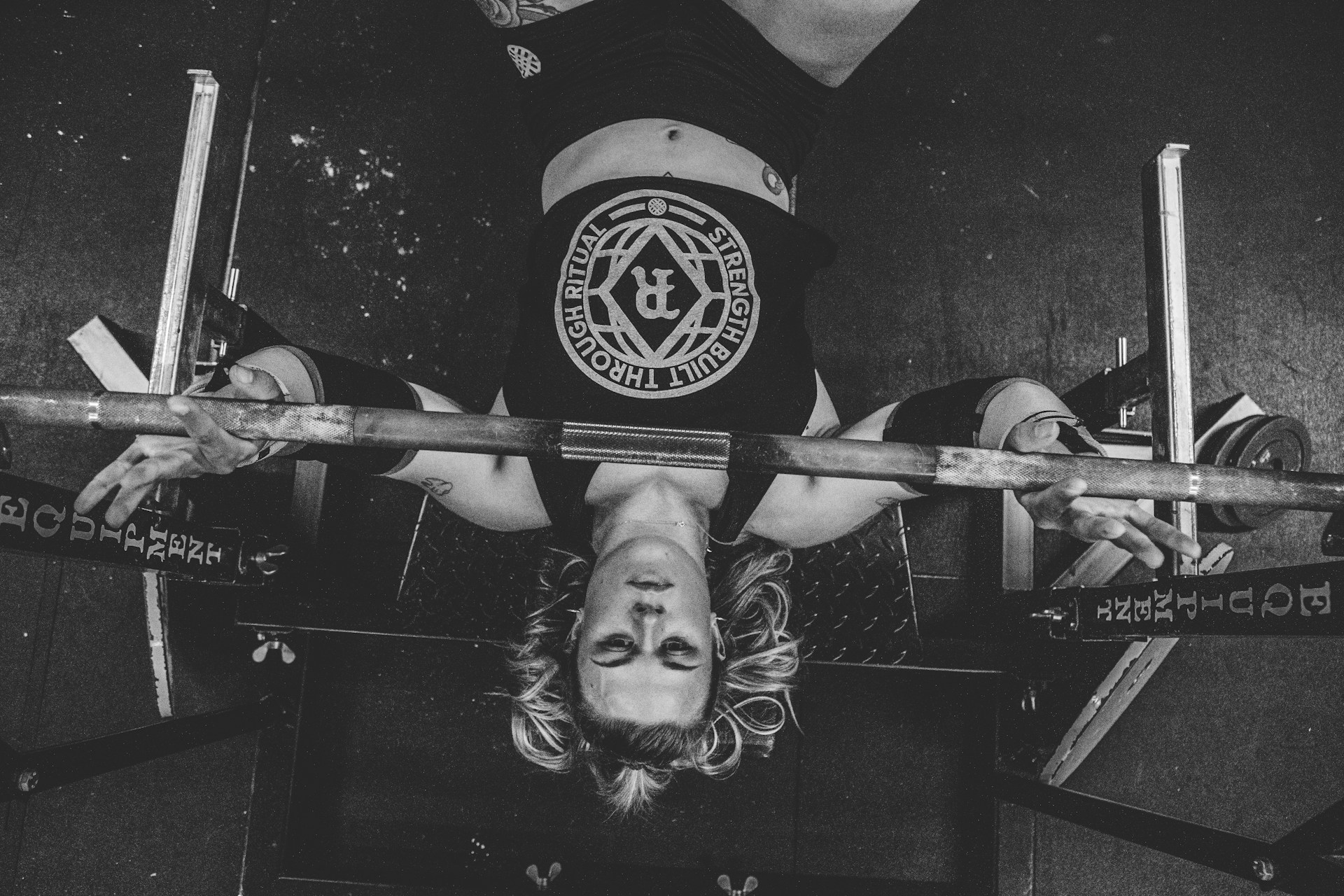
Wrist wraps are not a crutch — they're a tool. For heavy pressing movements (bench press, overhead press, push press), wraps provide external stabilization that reduces the demand on wrist ligaments and tendons while they heal.
The key is using wraps strategically: for working sets at 80%+ of your max, not for warm-ups or light sets. You still want to develop wrist strength through moderate loads.
A good pair of wrist wraps for weightlifting should be stiff enough to limit excessive extension but flexible enough to allow a natural pressing motion. Look for wraps with a thumb loop for consistent positioning and enough length (18-24 inches) to provide adequate coverage.
When to use wraps:
- Heavy bench press and overhead press (80%+ 1RM)
- Any pressing movement where wrist pain increases with load
- During the recovery period while implementing the mobility fixes below
When NOT to use wraps:
- Warm-up sets (you need the wrist to practice supporting load)
- Pulling movements (deadlifts, rows — wraps don't help here; use straps if needed)
- Light hypertrophy work (let the wrist build tolerance through moderate loading)
Step 3: Daily Wrist Mobility Protocol (5 Minutes)
Do this every day — especially before pressing sessions.
Exercise 1: Wrist CARs (Controlled Articular Rotations)
Extend your arm forward, make a fist, and slowly rotate your wrist through its full range of motion. 10 circles clockwise, 10 counterclockwise, each wrist.
Exercise 2: Weighted Wrist Extensions
Hold a light dumbbell (3-5 lbs) with your forearm resting on your thigh, palm down. Slowly extend the wrist upward, hold 2 seconds, lower. 3 sets of 15 per hand. This directly strengthens the neglected wrist extensors.
Exercise 3: Loaded Wrist Flexion Stretch
Get on all fours with your fingers pointing toward your knees (hands reversed). Gently lean back, loading the wrist flexors into a stretch. Hold 30 seconds, repeat 3 times.
Exercise 4: Plate Pinch Holds
Pinch two 10-lb plates together (smooth sides out) and hold for 30 seconds per hand. This builds the intrinsic hand muscles that stabilize the carpal bones. 3 sets per hand.
Exercise 5: Rubber Band Extensions
Wrap a thick rubber band around all five fingertips and open your hand against the resistance. 3 × 20 per hand. This is the single most targeted exercise for wrist extensor balance.
Step 4: Modify Training (Temporary)
While your wrists recover, you don't need to stop training — you need to train smarter.
Swap barbell bench for dumbbells. Dumbbells allow the wrist to rotate into a neutral (hammer) position during the press, dramatically reducing wrist extension demand. Research in the Journal of Strength and Conditioning Research shows that neutral-grip pressing activates comparable chest and triceps musculature to the barbell bench (Saeterbakken et al., 2017).
Use a neutral-grip bar for pressing. If your gym has a Swiss bar or football bar, these allow heavy pressing with zero wrist extension.
Reduce front squat frequency. Substitute safety bar squats or goblet squats during the recovery period.
Avoid wrist-intensive isolation work. Heavy barbell curls and skull crushers can aggravate wrist pain. Use cable or dumbbell alternatives with neutral grips.
Step 5: Address the Root Cause (Long-Term)
Once acute pain subsides (typically 2-4 weeks with the protocol above), you need to build wrist resilience to prevent recurrence.
Progressive Wrist Loading: Start incorporating wrist push-ups (on the backs of your hands, carefully) and gradually increase the time your wrists spend under load during regular training.
Forearm Strength Work: Add 2-3 sets of wrist curls (flexion and extension) and farmer's walks to every training session. Farmer's walks are particularly effective because they load the wrist in a functional, stabilized position. Use lifting straps only when grip fails — let the forearms work.
Grip Training: Dead hangs, towel pull-ups, and plate pinches build the wrist and hand complex as a unit. Two dedicated grip sessions per week is sufficient.
When to See a Professional
Most lifting-related wrist pain resolves with the approach above within 2-6 weeks. However, see a sports medicine physician or orthopedic specialist if:
- Pain persists beyond 6 weeks despite technique fixes and mobility work
- You experience numbness or tingling in the fingers (possible nerve compression)
- The wrist swells significantly after training
- Pain is present at rest, not just during loading
- You heard a "pop" or "snap" during a lift followed by immediate pain
These could indicate TFCC tears, scapholunate ligament damage, or tendinopathy requiring imaging and professional intervention. The Mayo Clinic recommends evaluation for any joint pain lasting longer than two weeks that doesn't respond to rest and self-care (mayoclinic.org).
The Complete Wrist Recovery Equipment List
For heavy pressing with wrist pain, the right support gear makes the difference between training through the issue and making it worse:
- Wrist wraps — for bench and overhead press stability during recovery. Tribe Lifting's wraps (4.6★, 5,000+ reviews) provide the right balance of stiffness and flexibility for pressing movements.
- Lifting straps — to maintain pulling volume without overloading wrist grip during recovery.
- Weight lifting belt — for heavy squats and deadlifts, so you can brace the core without relying on wrist support for stability.
Related Reading
Get Stronger Every Week
Join 50,000+ lifters getting evidence-based training advice in their inbox.
Frequently Asked Questions
What causes wrist pain during bench press and overhead press?
The most common cause is excessive wrist extension under load — the bar sits too high in the palm, forcing the wrist into hyperextension. Fixing your grip so the bar rests over the heel of your hand (directly above the forearm bones) resolves this in most cases. Weak wrist extensors and insufficient warm-up are secondary factors.
Are wrist wraps better than wrist mobility drills for pain?
They serve different purposes and you should use both. Wraps provide immediate symptom relief during heavy pressing, allowing you to continue training while the underlying issue heals. Mobility drills fix the root cause — weakness, imbalance, and restricted range of motion. Use wraps for heavy work and mobility drills daily for long-term prevention.
Can you keep training heavy with wrist pain?
In most cases, yes — with modifications. Switch to neutral-grip pressing (dumbbells, Swiss bar), use wrist wraps for heavy barbell work, reduce wrist-intensive isolation exercises, and implement the daily mobility protocol. If pain increases despite these modifications, reduce intensity for 1-2 weeks.
How long does it take to fix wrist pain from lifting?
Most lifters see significant improvement within 2-4 weeks of implementing grip fixes and daily mobility work. Full resolution, including building long-term wrist resilience, typically takes 4-8 weeks. If pain persists beyond 6 weeks, consult a sports medicine professional.
Should I use wrist wraps all the time?
No. Use wraps strategically for heavy pressing sets (80%+ of your max) and during the acute recovery phase. For warm-up sets and moderate-weight work, train without wraps to build intrinsic wrist strength. The goal is to need wraps less over time, not more.


