How to Break Through a Strength Plateau: 7 Proven Methods

Every lifter hits a wall. You walk into the gym, load the barbell with the same weight you have been grinding against for weeks, and once again it refuses to budge past the sticking point. If you have been asking yourself how to break a strength training plateau, you are not alone — and you are not stuck forever.
Plateaus are a natural part of the adaptation process. The strategies below draw on peer-reviewed research and decades of coaching wisdom to give you a clear, actionable path forward. Whether your squat, bench, or deadlift has stalled, at least one of these seven methods will reignite your progress.
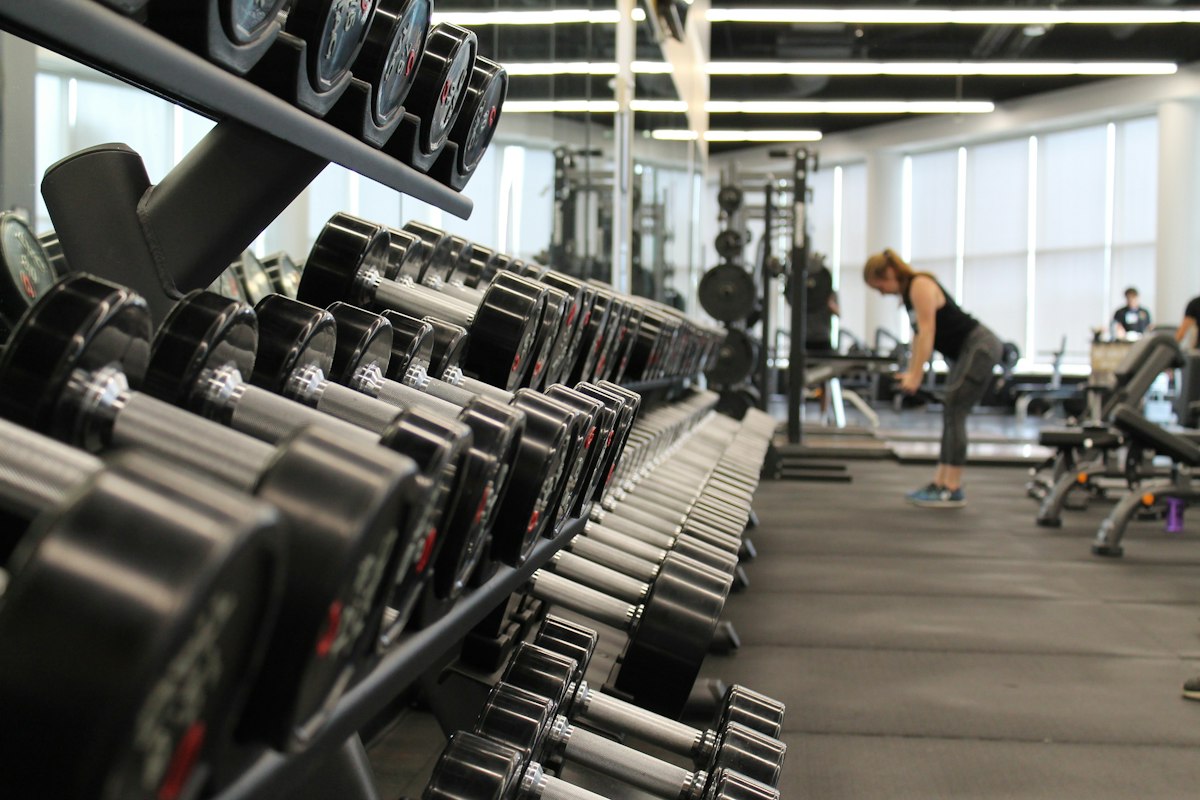
Why Strength Training Plateaus Happen
Before you can fix a plateau, you need to understand why it occurs. Strength gains follow a principle called the General Adaptation Syndrome (GAS), first described by Hans Selye. Your body adapts to a specific training stimulus over time, and eventually that stimulus is no longer novel enough to force further adaptation (ACSM Position Stand, 2009).
Common reasons a plateau develops include:
- Insufficient variation — performing the same sets, reps, and loads week after week.
- Accumulated fatigue — training hard for too long without a recovery period.
- Nutritional deficit — under-eating calories or protein when the body needs fuel for adaptation.
- Technical inefficiency — energy leaks in your form that become more costly as loads increase.
- Weak supporting muscles — a chain is only as strong as its weakest link.
Each of the seven methods below targets at least one of these root causes. If you are new to structured training, you may also benefit from our Complete Beginner Strength Training Program to build a solid foundation first.
1. Periodize Your Training to Break Through Strength Plateaus
Linear progression — adding weight every session — works beautifully for beginners, but it has an expiration date. Once you exhaust those initial neuromuscular adaptations, you need a more sophisticated approach.
Undulating periodization alternates between heavy, moderate, and light training within the same week. A landmark 2002 study published in the Journal of Strength and Conditioning Research found that daily undulating periodization produced significantly greater strength gains than linear periodization over 12 weeks (Rhea et al., 2002).
Sample Weekly Undulating Setup
- Monday (Heavy): 5 sets of 3 at 87-90% 1RM
- Wednesday (Moderate): 4 sets of 6 at 75-80% 1RM
- Friday (Light/Volume): 3 sets of 10 at 65-70% 1RM
This approach exposes your muscles and nervous system to varied stimuli, preventing the staleness that causes plateaus.
2. Microload for Continued Progressive Overload
When 5-pound jumps feel impossible, stop trying to make them. Fractional plates (0.5 to 1.25 lbs per side) let you add as little as one pound to the bar each week. Over a 12-week training cycle, that is 12 lbs on your lift — meaningful progress that compounds over time.
Microloading is particularly effective for upper-body lifts like the bench press and overhead press, where the smaller muscle groups fatigue faster. If you want a deeper dive into bench press programming, check out our 5x5 Strength Program guide.
Another way to apply progressive overload without adding weight is to increase the number of quality reps at a given load, decrease rest periods, or add pauses. The key is that something progresses every week.
3. Attack Your Weak Points to Overcome Strength Plateaus

A plateau almost always has a weak link behind it. If your deadlift stalls at the floor, your quads and upper back likely need work. If your squat caves at the bottom, your adductors and core are the bottleneck.
Identifying and Fixing Common Weak Points
- Squat stalls at the bottom: Add paused squats, belt squats, and leg presses. Strengthen the core with heavy planks and Pallof presses. A quality Tribe Lifting Weight Lifting Belt provides the intra-abdominal pressure feedback you need to stay tight through the hole while you build that raw core strength.
- Bench stalls at mid-range: Program close-grip bench press, pin presses from the sticking point, and heavy tricep dips. Protect your wrists under heavy loads with Tribe Lifting Wrist Wraps — they keep the wrist joint stacked and neutral so force transfers directly into the bar.
- Deadlift stalls at lockout: Rack pulls, hip thrusts, and heavy kettlebell swings target the posterior chain. If grip is giving out before your back and legs do, a pair of Tribe Lifting Lifting Straps eliminates grip as the limiting factor so you can actually train the muscles you are trying to strengthen.
Accessory work does not need to be complicated. Pick 2-3 exercises that directly target your sticking point and train them for 3-4 sets of 8-12 reps, twice per week. For detailed deadlift technique and weak point analysis, see our Complete Deadlift Guide.
4. Strategic Deloading: The Counter-Intuitive Plateau Breaker
It sounds backwards: lift less to lift more. But a planned deload — reducing volume and intensity by 40-60% for one week — allows your body to dissipate accumulated fatigue and express the fitness you have already built.
The National Strength and Conditioning Association (NSCA) recommends deload weeks every 4-6 weeks of hard training, especially for intermediate and advanced lifters (NSCA, Practical Approach to Deloading). If you have been pushing hard for 6 or more weeks without a lighter period, fatigue may be masking your true strength.
How to Deload Effectively
- Keep the same exercises — do not change your movement patterns.
- Reduce load to 50-60% of your working weight.
- Cut total sets by roughly 40-50%.
- Focus on technique, speed, and mind-muscle connection.
- Prioritize sleep, nutrition, and stress management.
Many lifters report hitting personal records the week after a well-timed deload. The gains were there all along — you just needed to let them surface.
5. Use Accommodating Resistance to Blast Past Sticking Points
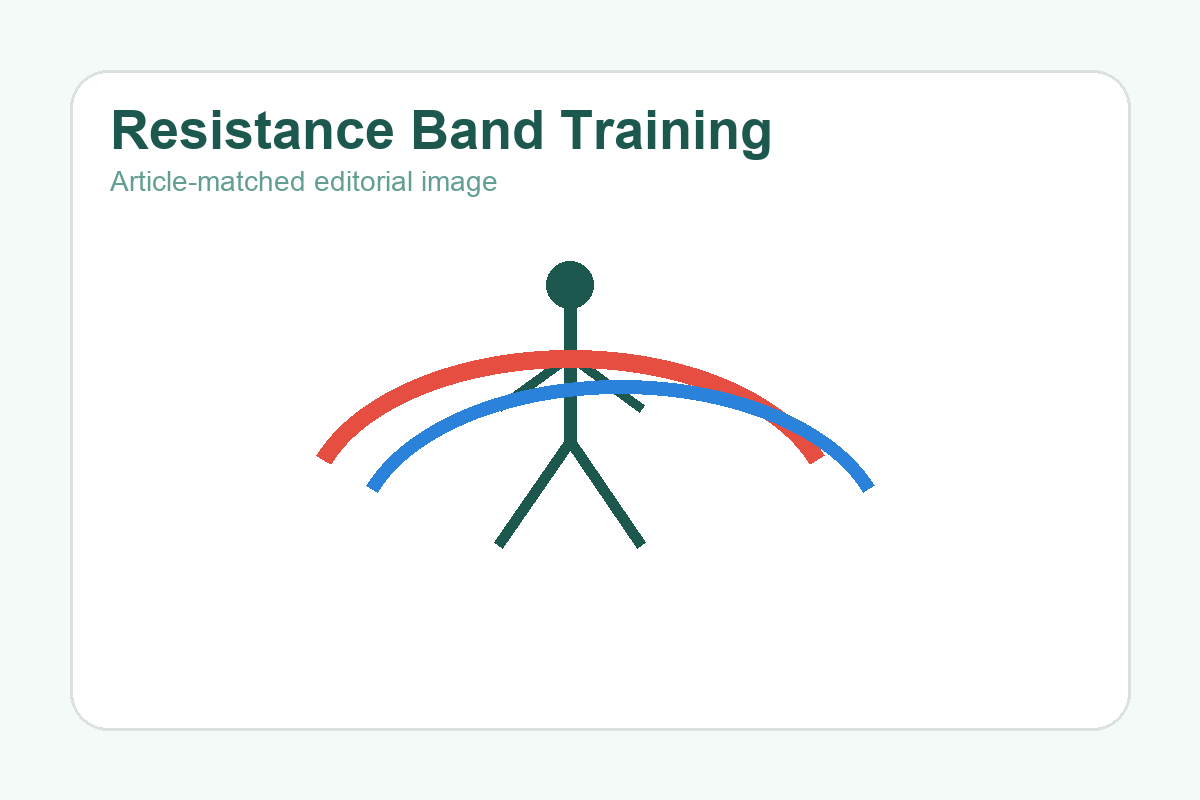
Bands and chains change the resistance curve of a lift so that the load is lightest at the bottom (where you are weakest) and heaviest at the top (where you are strongest). This teaches your nervous system to accelerate through the entire range of motion instead of decelerating at the sticking point.
Research from the Journal of Strength and Conditioning Research has shown that combining free weights with elastic resistance produces superior strength gains compared to free weights alone, particularly in trained lifters (Anderson et al., 2008).
How to Implement Band Training
Loop a set of Tribe Lifting Resistance Bands over the barbell and anchor them to the base of the rack or heavy dumbbells on the floor. Start by replacing one main lift session per week with a banded variation:
- Banded squats: 6 sets of 2 at 55-65% bar weight plus band tension. Focus on explosive concentric speed.
- Banded bench press: 8 sets of 3 at 50-60% bar weight plus band tension. Drive the bar as fast as possible.
- Banded deadlifts: 6 sets of 1-2 at 60-70% bar weight plus band tension. Reset between each rep.
The bands also double as excellent warm-up and mobility tools — use them for shoulder dislocates, pull-aparts, and hip activation before every session.
6. Optimize Nutrition and Recovery for Strength Gains
You cannot out-train a poor diet. If you are in a caloric deficit — intentionally or not — your body simply does not have the raw materials to build new muscle tissue and strengthen connective tissue.
Nutritional Priorities for Breaking Plateaus
- Caloric surplus of 200-300 kcal per day. You do not need a massive bulk, but you do need to provide an energy surplus for adaptation.
- Protein intake of 1.6-2.2 g per kg bodyweight. A 2018 meta-analysis in the British Journal of Sports Medicine confirmed this range as optimal for maximizing resistance-training-induced muscle gains (Morton et al., 2018).
- Creatine monohydrate (5 g daily). The most researched and effective legal supplement for increasing strength and power output.
- 7-9 hours of quality sleep. Growth hormone peaks during deep sleep, and sleep deprivation has been shown to reduce maximal voluntary strength by up to 10%.
Track your food intake for at least one week to identify gaps. Many lifters who believe they are eating enough discover they are 400-600 calories short of what their training demands.
7. Refine Your Technique to Unlock Hidden Strength
At submaximal loads, sloppy technique might not cost you the lift. At 95% of your max, every energy leak is the difference between a make and a miss. Technique refinement is one of the most underrated ways to break through a strength training plateau.
Key Technique Checkpoints
- Squat: Brace hard before unracking. Sit back into the hips. Drive the knees out. Keep the chest tall. A solid belt — like the Tribe Lifting Weight Lifting Belt — gives you something to brace against and provides proprioceptive feedback for optimal core positioning.
- Bench press: Retract and depress the scapulae. Maintain a strong leg drive. Touch the bar to the same point every rep. Use Tribe Lifting Wrist Wraps on working sets above 80% to keep the wrist joint from collapsing under load.
- Deadlift: Wedge into the bar before pulling. Push the floor away rather than pulling the bar up. Lock the lats by squeezing oranges in your armpits. When grip starts slipping on heavy singles, Tribe Lifting Lifting Straps let you focus entirely on technique instead of worrying about the bar rolling out of your hands.
Film your lifts from the side and front angles. Compare them to proficient lifters at similar body proportions. Small adjustments — a wider stance, a slight grip change, better breathing patterns — can add 5-15 lbs to your lifts almost overnight.
Putting It All Together: Your Plateau-Busting Action Plan
You do not need to implement all seven strategies at once. Start by identifying the most likely cause of your plateau:
- Same program for 8+ weeks? → Start with Method 1 (periodization) and Method 5 (accommodating resistance).
- Failing at the same point in the lift? → Focus on Method 3 (weak points) and Method 7 (technique).
- Feeling run-down and unmotivated? → Prioritize Method 4 (deload) and Method 6 (nutrition and recovery).
- Upper-body lifts stuck? → Method 2 (microloading) combined with Method 3 (accessory work).
Give each intervention 4-6 weeks to take effect before evaluating. Strength adaptation is a slow process, and jumping between strategies every week is itself a recipe for spinning your wheels.
The plateau is not a wall — it is a signal. Your body is telling you it needs something different. Listen to that signal, apply the right strategy, and the gains will follow.
Get Stronger Every Week
Join 50,000+ lifters getting evidence-based training advice in their inbox.
Frequently Asked Questions
How long does a strength training plateau typically last?
Without changes to your training, a plateau can persist indefinitely because you are simply repeating a stimulus your body has already adapted to. Once you implement targeted strategies — such as periodization changes, deloading, or weak point training — most lifters break through within 3 to 6 weeks.
How do I know if I am plateaued or just having a bad week?
A true plateau means your performance has stagnated for at least 2-3 consecutive weeks despite consistent training, adequate sleep, and proper nutrition. One bad session does not count — that could be stress, poor sleep, or undereating. Track your lifts in a training log so you can identify real trends versus normal day-to-day fluctuation.
Should I switch programs entirely when I hit a plateau?
Not necessarily. Program hopping is one of the most common mistakes lifters make. Instead, keep your main lifts and adjust the variables around them: change rep schemes, add accessory work targeting weak points, implement a deload, or add accommodating resistance. Only switch programs if your current one lacks periodization entirely.
Can I break a plateau while cutting weight?
It is possible but significantly harder. A caloric deficit limits your body's ability to recover and build new tissue. During a cut, focus on maintaining strength rather than building it. If you are stuck in a plateau and also dieting, consider returning to at least maintenance calories for 4-6 weeks to allow adaptation to occur.
Do supplements help break strength plateaus?
Creatine monohydrate at 5 grams daily is the only supplement with robust evidence for improving maximal strength. Caffeine at 3-6 mg per kg bodyweight taken 30-60 minutes before training can improve performance by 2-5 percent. Beyond those two, no supplement will meaningfully impact your plateau — focus on training and nutrition fundamentals first.


