A Month-Long Strength Program Template for Busy Lifters

Direct answer: a month long strength program should give busy lifters a repeatable four-week block: one baseline week, two progressive weeks, and one decision week. Train the squat, hinge, press, and pull patterns two to four times per week, keep the heavy work early in each session, use accessories to support the main lifts, and plan a deload only when fatigue is actually blocking performance.
The biggest mistake busy lifters make is trying to run a six-day plan on a three-day schedule. The program looks serious, but real life wins. Sessions get skipped, accessories pile up, and the main lifts never get enough consistent practice. A better plan starts with the calendar you actually have, then builds strength around it.

What a Month-Long Strength Program Needs
A useful monthly block needs four things: clear movement priorities, stable weekly volume, small progression targets, and a recovery checkpoint. The American College of Sports Medicine describes resistance training progression through variables such as load, volume, frequency, rest periods, exercise choice, and exercise order (ACSM position stand). That matters because a month-long plan should not change every variable at once.
Start with movement patterns instead of random exercises. Each week should include a squat pattern, a hinge pattern, an upper-body press, an upper-body pull, and enough trunk or loaded carry work to keep positions strong. If hypertrophy is also a goal, add small amounts of direct work for shoulders, arms, hamstrings, glutes, and upper back.
Keep the main lifts stable for the full month. If week one uses front squats, Romanian deadlifts, bench press, and rows, do not swap all of them in week two. Strength improves faster when you repeat the same skill often enough to measure it. For the progression rules behind that, read our guide to what actually counts as progressive overload.
Choose Two, Three, or Four Training Days
The right split is the one you can complete on your worst normal week. If you can train only twice, use two full-body sessions. If you have three days, use three full-body sessions or an upper/lower/full-body layout. If you have four days, use upper/lower or a powerlifting-style split with squat, bench, and deadlift exposure spread across the week.
For most busy lifters, three days is the sweet spot. It gives enough frequency to practice the big lifts while leaving recovery and schedule space. A simple Monday-Wednesday-Friday setup works well: lower emphasis, upper emphasis, then full-body strength. If weekends are easier, move one session there and keep at least one rest day between harder lower-body sessions.
Two-day training can still work if the sessions are focused. Put one squat or leg press, one hinge, one press, one row or pulldown, and two short accessories in each session. Four-day training gives more room for volume, but it also creates more chances to miss workouts. Do not choose four days because it looks more advanced. Choose it only if you can recover and attend consistently.

Place Heavy Days Before Accessories
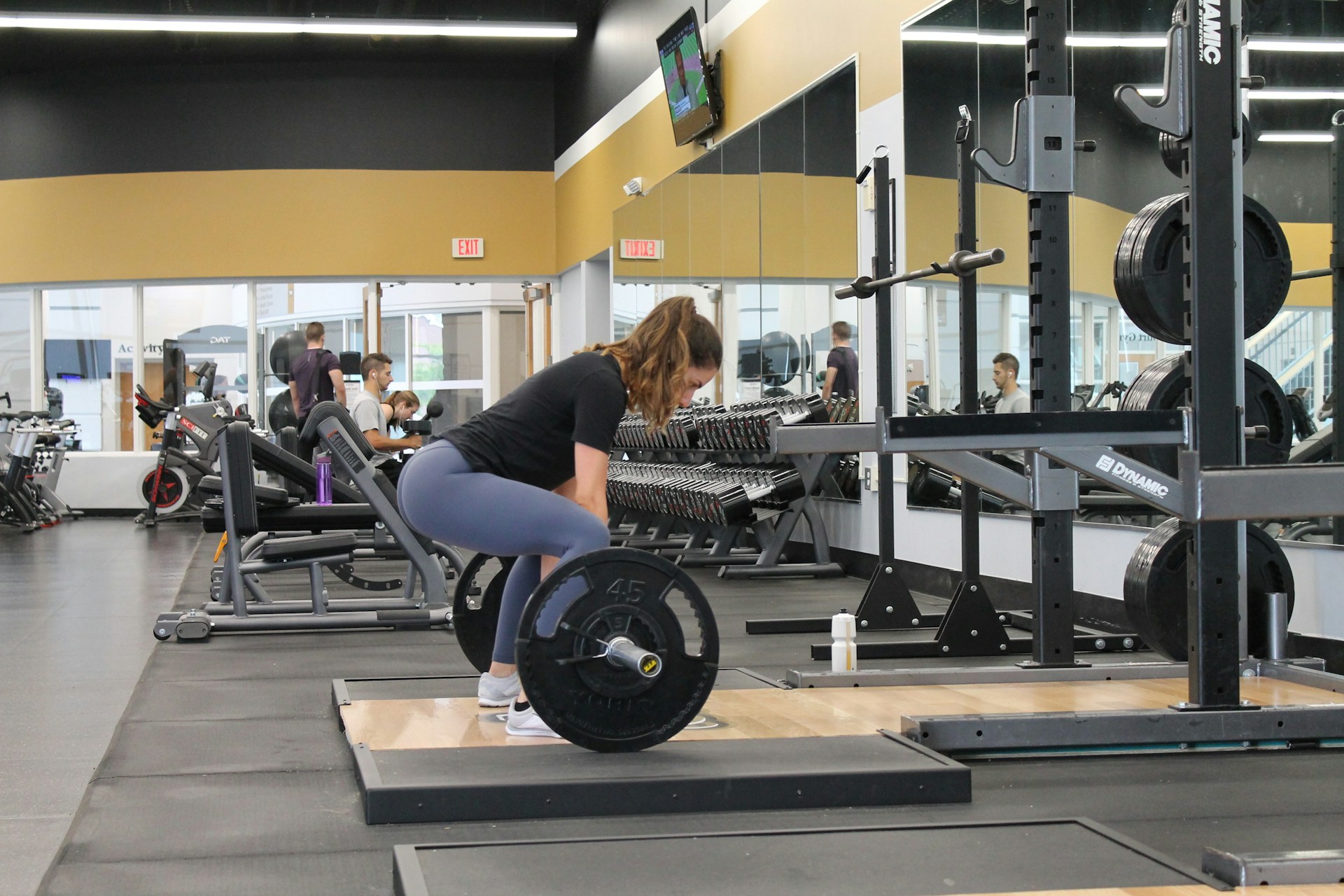
Heavy work belongs early in the session and early enough in the week that recovery is realistic. Squats, deadlifts, presses, and weighted pulls require coordination and attention. Do them before higher-rep accessory work, conditioning, or long finishers.
Use one main strength focus per session. On a three-day template, that could mean squat focus on day one, bench or overhead press focus on day two, and deadlift or hinge focus on day three. The other lifts still appear, but they are lighter, lower volume, or done as variations.
Most main lift work should land around one to three reps in reserve. A review on RPE and reps in reserve supports using perceived effort to guide loading when readiness changes (Helms et al.). In practice, that means you train hard without turning every busy-week session into a survival test.
Support gear can help when the load justifies it. The Tribe Lifting weight lifting belt fits heavy squat and hinge work, wrist wraps can make pressing more stable, and lifting straps make sense when grip limits rows or Romanian deadlifts. Use them to keep quality high, not to grind through pain.
Use Accessories to Support the Main Lifts
Accessories should solve a problem. They are not filler. Choose them based on what the main lifts need: more upper-back strength for deadlifts and squats, more triceps for pressing, more hamstrings for hinges, more single-leg control for squats, or more shoulder-friendly pulling to balance bench volume.
Keep accessory volume modest at first. A Sports Medicine meta-analysis found a dose-response relationship between weekly training volume and muscle growth, but recoverability still decides whether more sets help (Schoenfeld et al.). Busy lifters usually need fewer junk sets and more repeatable hard sets.
Use this simple rule: each session gets two to four accessory slots. Pick one upper-back or pulling movement, one lower-body or trunk movement, and one small-muscle movement if time allows. If a session is running long, cut accessories before cutting the main lift.
Resistance bands are useful here because they are fast to set up and easy to recover from. The Tribe Lifting resistance bands set works for rows, pulldowns, curls, and pressdowns. The fabric bands fit glute bridges, lateral walks, and lower-body warm-ups before squats or split squats.
Four-Week Template
Here is a practical three-day month-long strength program. Run it for four weeks before making major changes.
Day 1: Squat Focus
- Squat or front squat: 3-4 sets of 4-6
- Bench press: 3 sets of 6-8
- Romanian deadlift: 2-3 sets of 6-10
- Row: 3 sets of 8-12
- Split squat or plank: 2 sets
Day 2: Upper-Body Focus
- Bench press or overhead press: 4 sets of 4-6
- Pull-up, pulldown, or band pulldown: 3-4 sets of 6-12
- Paused squat or leg press: 2-3 sets of 6-10
- Dumbbell press or push-up: 2-3 sets of 8-12
- Curl, pressdown, or lateral raise: 2 sets
Day 3: Hinge Focus
- Deadlift, trap bar deadlift, or heavy Romanian deadlift: 3 sets of 3-6
- Incline press or close-grip bench: 3 sets of 6-10
- Squat variation: 2-3 sets of 6-8
- Chest-supported row: 3 sets of 8-12
- Hamstring curl, hip thrust, or band good morning: 2-3 sets
Week one is your baseline. Choose loads you can complete with clean reps and one to three reps in reserve. Week two adds one rep per set where possible. Week three adds load only if the top of the range is owned. Week four is the decision week: repeat loads if progress is still moving, add a small amount if performance is strong, or reduce volume if fatigue is building.
When to Deload or Repeat the Block
Do not deload just because the calendar turned over. Deload when fatigue is actually interfering with training quality. Signs include heavy warm-ups for multiple sessions, several lifts stalling at once, joint pain changing technique, poor sleep, and motivation dropping below normal.
If only one lift stalls, adjust that lift. Use a smaller load jump, repeat the same weight, reduce one set, or choose a variation that fits your body better. If several lifts stall together, cut volume 30-50% for one week while keeping the same movement patterns. Our deload week guide gives a full step-by-step version.
If week four looks strong, repeat the block with small changes. Add five pounds to main lifts that earned it, add one accessory set only where recovery is clearly good, or swap one accessory that is no longer helping. Keep the structure. Busy lifters win by stacking repeatable months, not by chasing a new program every Monday.
Bottom Line
A month long strength program should be simple enough to finish and structured enough to measure. Pick the number of training days you can actually complete, prioritize the main lifts, use accessories with a purpose, and make week four a decision point instead of an automatic max-out week.
The best monthly block is not the most complicated one. It is the one you can run, recover from, improve, and repeat.
Get Stronger Every Week
Join 50,000+ lifters getting evidence-based training advice in their inbox.
Frequently Asked Questions
How many heavy days should a four-week strength block include?
Most busy lifters need two or three heavy exposures per week, not five. Put one main strength focus in each session and keep the rest of the work supportive.
Is two days per week enough for a month-long strength program?
Yes, two days can work if both sessions are full-body and include squat, hinge, press, and pull patterns. Three days is usually better when recovery and scheduling allow it.
How should accessories support squat, bench, and deadlift progress?
Accessories should target the weak links that limit the main lifts: upper back, hamstrings, triceps, single-leg control, trunk stability, or shoulder-friendly pulling.
When should I deload during a monthly strength program?
Deload when fatigue blocks performance across several lifts, warm-ups feel unusually heavy, joints change your technique, or motivation and sleep drop. Do not deload automatically if week four is still progressing.
Can I repeat the same monthly strength block?
Yes. If the block worked, repeat it with small load increases or one accessory change. Consistent monthly blocks usually beat constantly switching programs.


